Foreigners Buying Land and Property in Thailand: What Legal Rules Should You Understand?



The expansion of Thailand’s real estate market, especially in tourism destinations and major economic centres such as Bangkok and Pattaya, continues to attract strong interest from foreign investors. If you are interested in Invest with Global Top Group, it is nevertheless important to understand that the legal rules governing foreigners buying land in Thailand include specific requirements, criteria, and conditions that differ significantly from those in many other countries. Understanding the legal structure correctly and thoroughly before signing a contract or transferring money is therefore one of the most important steps in protecting your assets and building stable long-term returns.
Legal Structure and Requirements for Foreigners Buying Land in Thailand

The legal framework for foreigners buying land in Thailand clearly defines the ways in which foreign nationals may hold real estate in Thailand, generally divided into two main categories based on property type.
- Condominium (Freehold Ownership)
- Foreign Quota: Foreigners may own up to 49% of the total floor area of all condominium units in the building, while the remaining 51% is reserved for Thai ownership.
- Fund Transfer (FET Form): Funds must be transferred from overseas in foreign currency and exchanged into Thai baht, with the Foreign Exchange Transaction Form presented to the Land Office.
- Ownership Rights: The buyer receives a condominium title deed and holds 100% legal ownership of the unit, with the right to resell, rent out, or transfer the property to heirs in accordance with the law.
- Land and Detached Houses / Pool Villas (Land & Villa)
- Legal Restriction: Foreign nationals are prohibited from directly owning land in Thailand.
- Long-Term Leasehold: A lease can be registered at the Land Office for a maximum period of 30 years at a time, with renewal provisions potentially included in the agreement.
- Usufruct: A registered right to possess, use, and enjoy benefits from the property, either for a fixed period of up to 30 years or for the lifetime of the usufructuary.
Choosing the correct ownership structure not only helps ensure that the transaction proceeds smoothly and legally, but also has a direct impact on long-term value and asset management. Condominium ownership is particularly relevant because it is the most popular property option among foreign buyers due to Thai law allowing direct legal ownership under clearly defined conditions, which include several important details explained below.
Condominium Ownership Under the Foreign Freehold Quota
The Condominium Act B.E. 2522 (1979) permits foreigners to legally hold condominium ownership under Foreign Freehold, provided that the total foreign ownership does not exceed 49% of the total condominium floor area and that complete FET documentation is available to confirm that the purchase funds were transferred from overseas in accordance with the purchase price or assessed value requirements.
Rights and Obligations of Foreign Freehold Owners
Foreign buyers who hold condominium units under Foreign Freehold generally enjoy legal ownership rights comparable to those of Thai condominium owners, including the right to reside in the unit, rent it out to generate income, use it as collateral, and transfer ownership through resale in the secondary market in line with the growth of Pattaya real estate in the EEC era, as well as pass the property on to heirs in accordance with the law.
Legal Rules for Foreign Ownership of Land and Detached Houses / Villas

The Land Code B.E. 2497 (1954) generally prohibits foreign nationals from directly owning land in Thailand, except where permission is granted under special legal provisions, such as certain BOI-related investment structures or under Section 96 bis of the Land Code, which requires investment of not less than THB 40 million and approval from the Minister of Interior. In practice, such cases are relatively rare.
As a result, foreign buyers wishing to acquire detached houses, pool villas, or vacant land generally need to rely on alternative legal structures in order to obtain lawful rights to use the property.
Long-Term Leasehold
Leasehold is one of the most commonly used legal mechanisms under the Thai Civil and Commercial Code for holding houses and villas, where the foreign buyer enters into a lease agreement for the land or house with the legal owner.
- Legal Duration: Thai law allows the registration of a lease of immovable property for a maximum of 30 years at a time under Section 538.
- Renewal Clause: A lease agreement may include an agreement to renew the lease for additional terms, such as 30+30+30 years. However, legally, each renewal remains a contractual obligation that must be registered again when the previous term expires, and each new 30-year period must comply with the law in force at that time.
Usufruct
A usufruct under Sections 1417–1428 of the Thai Civil and Commercial Code is a real right registered on the land title deed that allows the foreign usufructuary to possess, use, and receive benefits from the land and buildings, including rental income.
- Duration: It can be registered for a fixed period of up to 30 years or for the lifetime of the usufructuary.
- Limitation: A usufruct is a personal right. When the usufructuary dies, the usufruct terminates immediately and cannot be inherited by heirs.
Establishing a Thai Legal Entity (Thai Company Ownership)
In the past, some buyers used Thai limited companies, with Thai shareholders holding 51% and foreign shareholders holding 49%, to acquire land. However, the Department of Lands and the Ministry of Interior have introduced stricter measures to investigate the use of Thai nationals as Nominee shareholders.
If it is found that the Thai shareholders did not genuinely invest their own funds or acted as nominees to circumvent restrictions on foreign land ownership, this may constitute a criminal offence under Section 113 of the Land Code and may result in an order requiring the land to be disposed of.
| Ownership Structure | Legal Basis | Duration | Inheritance Rights | Legal Risk Level |
| Foreign Freehold (Condo) | Condominium Act B.E. 2522 | Permanent | Can be transferred to heirs 100% | Lowest (legally recognised) |
| Leasehold | Civil and Commercial Code, Section 538 | Maximum 30 years per term | Transferable if stated in the contract | Low–Moderate (depends on contract terms) |
| Usufruct | Civil and Commercial Code, Section 1417 | Up to 30 years / Lifetime | No (terminates upon death) | Low (registered at the Land Office) |
| Thai Company (Nominee) | Civil and Commercial Code / Land Code | Permanent while company exists | Transfer through company shares | Very High (if illegal nominee structure is used) |
Legal Procedures for Ownership Transfer and Financial Transactions
Property transactions under the legal framework for foreigners buying land in Thailand involve several legal procedures and important documents that must be prepared carefully to ensure that ownership transfer at the Land Office is completed correctly and smoothly.
The main process is generally as follows:
- Step 1: Property Due Diligence — Check the title deed, existing encumbrances, construction permits, and foreign quota status.
- Step 2: Prepare the Sale and Purchase Agreement (APA) — Agree on the terms, payment schedule, and allocation of transfer-day fees.
- Step 3: Transfer Funds from Overseas — Transfer foreign currency into a Thai bank account and clearly state the purpose of the transfer.
- Step 4: Obtain the FET Certificate — Apply for the Foreign Exchange Transaction Form or relevant bank transfer confirmation.
- Step 5: Transfer Ownership at the Land Office — Pay fees and taxes, settle the remaining purchase amount, and receive the endorsed title deed showing ownership.
Property Due Diligence
Before paying a deposit, foreign buyers or their legal advisers should carefully verify the legal status of the property.
- Title Deed Search: Check with the Land Office whether the title deed (Nor Sor 4 Jor) is subject to any encumbrances, mortgages, usufructs, court disputes, or seizure orders.
- Foreign Quota Verification: For condominium purchases, obtain a certificate from the condominium juristic person confirming that foreign ownership remains within the 49% limit.
- Construction Permit and EIA: For projects under development, verify that the project has obtained the required construction permit (Aor.1) and Environmental Impact Assessment (EIA) approval in accordance with the law.
Financial Transaction Requirements and FET Documentation
Regulations of the Bank of Thailand and the Department of Lands require that funds used to purchase a condominium under the foreign quota be supported by evidence that the funds were transferred from overseas.
- Name and Purpose of Transfer: The name of the sender overseas or the recipient in Thailand should match the foreign buyer named in the sale and purchase agreement, and the SWIFT transfer instruction should clearly state the purpose, such as “To purchase condominium unit [NO.] at [PROJECT NAME]”.
- Transfer Amount: The total amount transferred, once converted into Thai baht, must not be less than the sale price of the condominium stated in the sale and purchase agreement in order for the bank to issue complete FET documentation.
Fees and Taxes on the Ownership Transfer Date
Property ownership transfers in Thailand involve various fees and taxes payable at the Land Office, which are usually allocated between buyer and seller according to the sale and purchase agreement.
- Transfer Fee: 2% of the official appraised value determined by the Land Department.
- Withholding Tax: Calculated according to the applicable personal or corporate tax structure of the seller.
- Specific Business Tax: 3.3% of the official appraised value or actual sale price, whichever is higher, where the seller has held the property for less than five years.
- Stamp Duty: 0.5%, payable only where Specific Business Tax does not apply.
Legal Risks and Risk Management Guidelines
Legal mistakes in property transactions often arise from misunderstanding legal requirements or relying on complex structures that may carry significant legal risk. To reduce potential losses, foreign buyers should consider the following precautions.
- Avoid Nominee Structures: Establishing a shell company in which Thai nationals hold shares without making genuine investment is a serious offence under the legal framework governing foreigners buying land in Thailand. Both the nominee shareholder and the foreign beneficiary may face fines and imprisonment under the Land Code.
- Be Cautious with Generic Contracts: Long-term Leasehold or Usufruct arrangements should not rely on standard contract templates downloaded from the internet. Agreements should be drafted and reviewed by a lawyer experienced in property law to ensure that important protections are included, such as Sublease rights and responsibility for maintenance costs.
- Check the Developer Track Record: Buying into a Pre-Sale development carries risks related to construction timing and EIA approval. Investing with a developer that has a history of completing projects on schedule, maintains strong financial standing, and follows legal requirements carefully can reduce the risk of cancellation or construction delays.
Safe and Legal Pattaya Property Investment Options
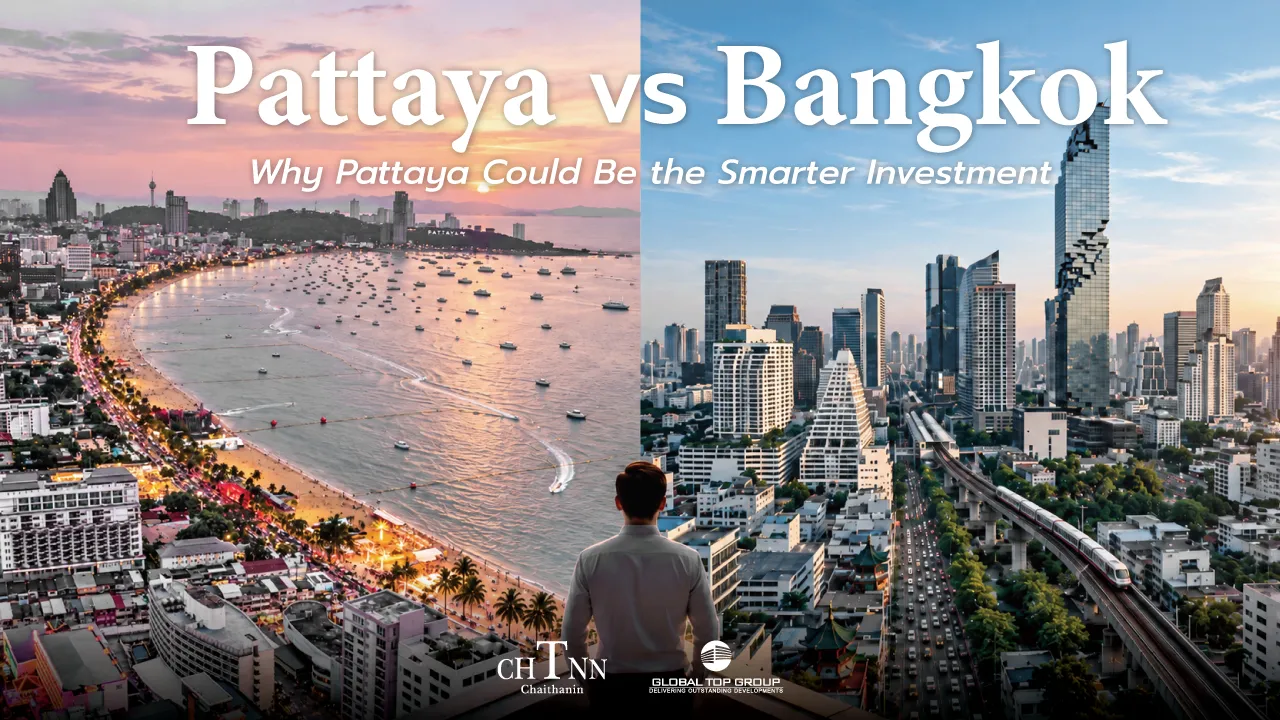
For foreign investors and buyers looking for rental income or a holiday home in Pattaya, investing in a condominium project under Foreign Freehold is one of the most legally straightforward, secure, and stable options in terms of ownership.
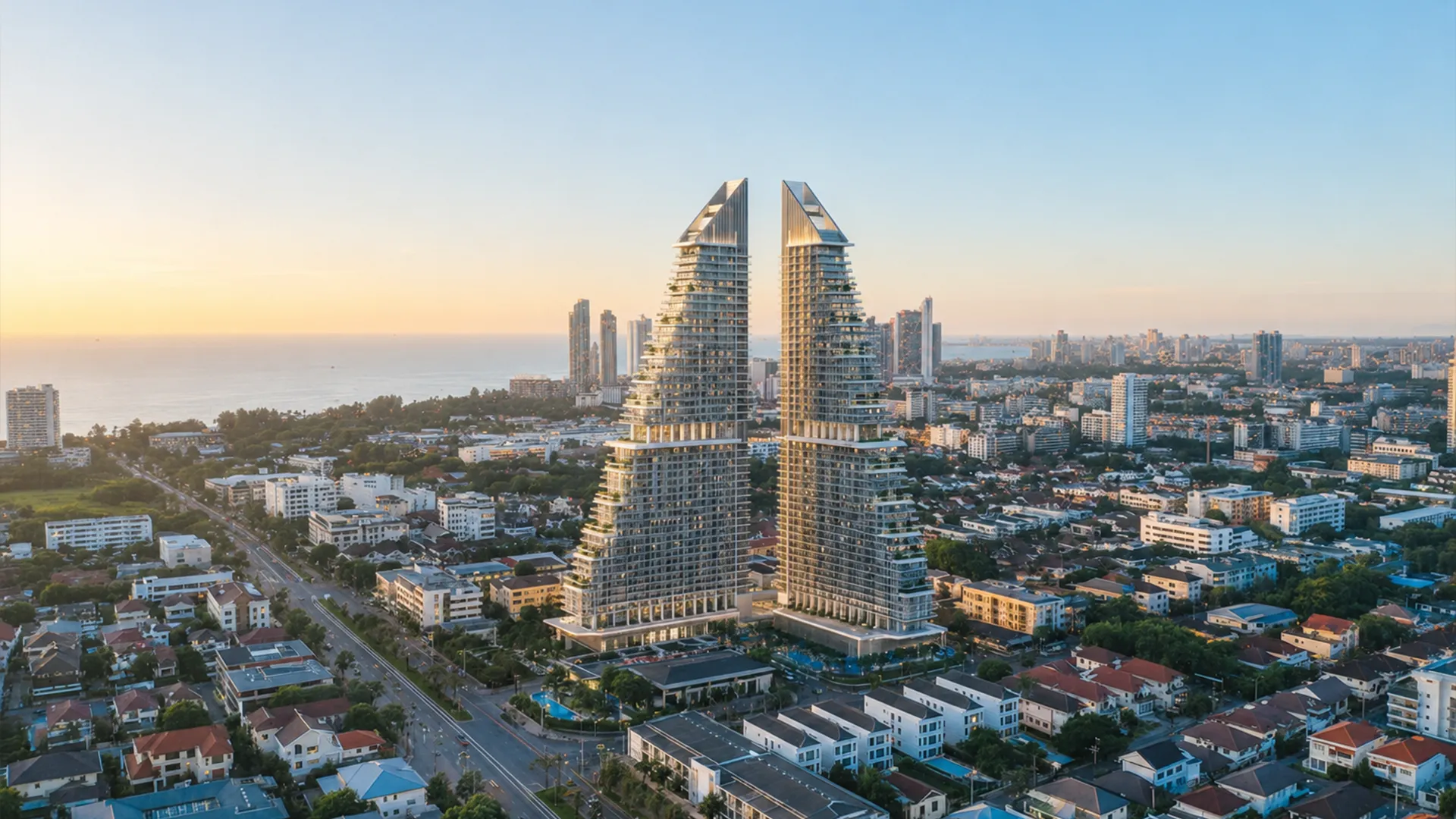
One of Pattaya’s leading property developers with long-standing experience and expertise in serving foreign buyers is Global Top Group, a developer with more than 40 years of industry experience, a proven Track Record, more than 11 award-winning quality projects, and more than 2,600 legally delivered residential units.
The group focuses on three key strengths:
- 100% Legally Compliant: Foreign Quota proportions comply with the Condominium Act, with title documentation ready for ownership transfer.
- Diverse Locations and Segments: Projects cover Central Pattaya, Wongamat, Pratumnak, and Thepprasit, across both High-Rise and Low-Rise formats.
- One-Stop Service: The team provides assistance with FET documentation, rental management, and coordination with professional legal advisers.
Why Invest with Global Top Group?
- Expertise in Legal Requirements and Foreign Buyer Documentation: The professional team at Global Top Group has extensive knowledge of the legal requirements governing foreigners buying land in Thailand and provides guidance and support throughout the process, from contract preparation and bank coordination for FET documentation to ownership transfer procedures at the Land Office.
- A Diverse Range of Projects Across Pattaya Submarkets:
- Love It Wongamat Beach: Luxury Wellness Living condominium in the high-end Wongamat area.
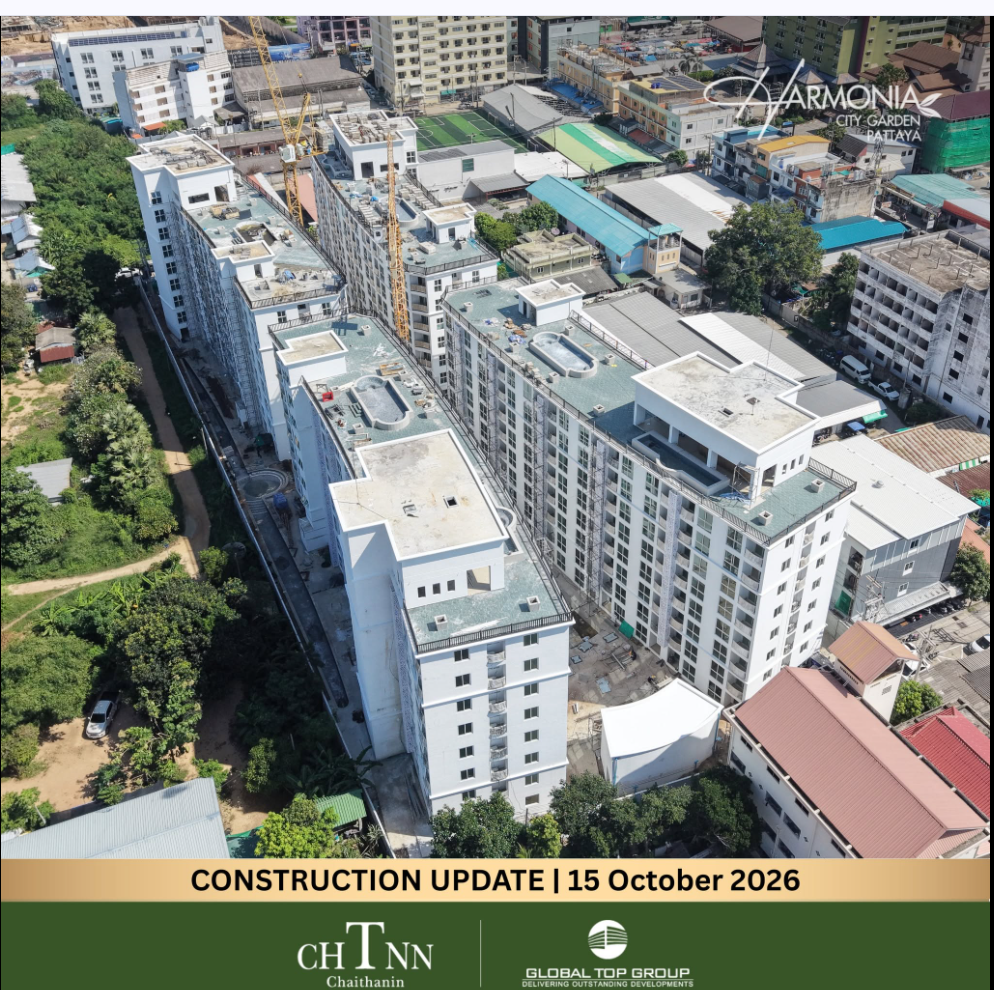
- Harmonia City Garden & Olympus City Garden: Resort-style condominiums in Central Pattaya with strong rental potential and liquidity.
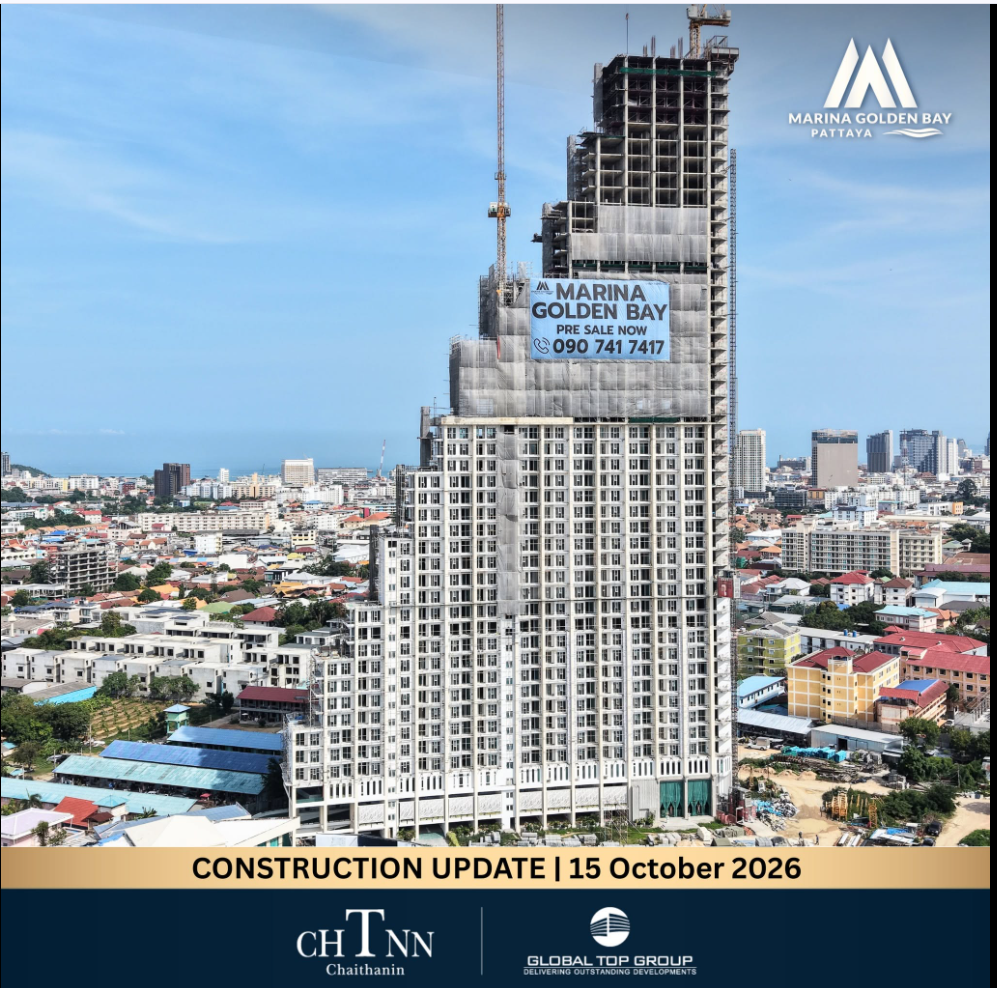
- Marina Golden Bay: A 51-storey High-Rise development and new landmark on Thepprasit Road.
- Paradise Ocean View: Beachfront condominium with a low unit count and a high level of privacy along the Bang Lamung beachfront.
- Comprehensive Rental Management Service: Helps foreign investors generate ongoing rental returns with a professional team handling property maintenance, tenant selection, and lease administration.
Conclusion
Understanding the legal framework for foreigners buying land in Thailand and choosing a highly reputable developer partner can make overseas property investment simpler, safer, and more secure from a legal perspective.
If you would like to explore project details, ownership structures, or receive investment guidance, you can review available developments and Invest with Global Top Group for greater confidence in holding quality real estate in Pattaya.